Key Points
Intrinsic aging — age-related changes triggered by processes inside the body: loss of fibroblast functional potential, glycation, oxidative stress, psychological stress, and chronic low-grade inflammation.
Extrinsic aging — acceleration of age-related changes caused by UV radiation, air pollution, smoking, mechanical trauma, and climate conditions.
Glycation — a non-enzymatic reaction with dermal proteins; collagen and elastin lose flexibility, the skin becomes stiffer, and wrinkles and sagging appear.
Transepidermal water loss (TEWL) — evaporation of moisture through the skin; increases when the skin barrier is weakened by mechanical stress, dry air, or climate change.
Myofascial facial self-massage — a technique whose effectiveness has been confirmed by a clinical study using computed tomography; it reduces skin sagging and lifts facial contours.
Contents
1. Skin as a multifunctional organ and a mirror of internal processes
2. Intrinsic skin aging: five key mechanisms
3. Extrinsic skin aging: five environmental factors
4. Longevity care for aging skin
5. Practical care for aging skin
Conclusions
FAQ
1. Skin as a multifunctional organ and a mirror of internal processes
The skin, with a surface area of about 1.8 m², is one of the largest organs of the human body and the surface most exposed to the environment. Constant exposure to potential hazards requires the skin to perform numerous tasks in order to maintain homeostasis. The skin provides a physical and biochemical barrier, performs a sensory-receptor function, and ensures the synthesis of vitamins and hormones. It is also an immune organ that actively protects the deeper tissues of the body. Like the mucosal barriers of the lungs and intestines, skin function relies on a well-coordinated system of epithelial and immune cells. Together, they ensure an adequate immune response and protection against injury, toxins, and infection. The days when skin was seen merely as a passive barrier are long gone: current scientific reviews present it, on solid grounds, as a multifunctional organ subject to both external and internal influences [1].
The skin is not an autonomous “shield” — it is closely connected to the body's internal systems. Hormones influence the condition of the skin: the rate of epidermal renewal, sebum production, pigmentation, and vascular reactivity. Systemic inflammatory states show up on the skin as redness, itching, psoriasis, or eczema. Diet and metabolism affect microcirculation, wound healing, and the skin's immune function. Caring for the skin is therefore not just a matter of cosmetics but also part of the broader concept of longevity. The skin reflects on its surface what is happening inside the body [2]. That is why, on scientific grounds, skincare should be built on two principles: protection and repair from the outside, stimulation and support from within.
2. Intrinsic skin aging: five key mechanisms
The main internal factors linked to skin aging, which can be influenced both systemically and through topical care, include (intrinsic aging):
1. Decreased collagen and elastin synthesis
With age, dermal fibroblasts lose potential: the synthesis of collagen and elastin declines. Elastin and collagen fibers are no longer renewed and become more prone to damage. This imbalance is a key part of skin aging. Even with adequate external protection, internal processes still lead to loss of structure and aging [3]. It has been scientifically proven that peptides and retinoids, as well as exfoliation and acids, stimulate the synthesis of collagen and elastin [4, 5].
2. Glycation
With age, the intensity of non-enzymatic reactions with proteins (collagen, elastin) increases → so-called “advanced glycation end products” (AGEs) form, making fibers less flexible and more brittle and disrupting their remodeling. These processes lead to stiffening of the dermis, loss of elasticity, and the appearance of wrinkles and sagging skin [6].
It has been scientifically proven that antioxidants can help reduce oxidative stress by decreasing AGE formation. Antioxidants help neutralize free radicals, reducing the oxidation of proteins, lipids, and nucleic acids, thereby slowing the formation of AGEs [7].
3. Decreased antioxidant defense and rising oxidative stress
With age, and under the influence of external factors, the formation of reactive oxygen radicals in the skin increases. This causes protein damage and a decline in fibroblast function. Oxidative stress is one of the fundamental internal mechanisms of skin aging, and a weakened antioxidant defense makes the skin especially vulnerable. It has been scientifically proven that antioxidants strengthen the skin's antioxidant defense and reduce damage caused by free radicals [8].
4. Stress
Current clinical observations link psychological stress to the onset or worsening of numerous skin conditions. This leads to accelerated aging and disruption of the skin's immune function and protective barrier [9]. It has been scientifically proven that wild indigo extract (found in Cryoshot Hydrating Serum) reduces cortisol levels in the skin by 70% and also helps raise levels of beta-endorphins, which soothe the skin. This dual action helps mitigate the visible effects of stress on the skin [10].
5. Chronic inflammation
The influence of systemic inflammation on skin aging is a widely recognized fact. This process constitutes chronic, low-grade systemic inflammation. With age, systemic inflammation increases, which is linked to a shift in the balance between pro-inflammatory and anti-inflammatory factors [11].
3. Extrinsic skin aging: five environmental factors
The main external factors that negatively affect the skin and accelerate its aging (extrinsic aging) are:
1. Ultraviolet radiation
Radiation in the UV-A (≈320–400 nm) and UV-B (≈290–320 nm) spectra has a profound effect on the skin. UV radiation causes direct DNA damage, impairs skin repair mechanisms, and induces gene mutations [12]. Chronic exposure without protection leads to photoaging (loss of elasticity, wrinkles, hyperpigmentation). UV radiation is the key modifiable external factor in skin damage [13]. It has been scientifically proven that photodamage to human skin caused by solar UV radiation can be reduced through the use of sunscreen.
2. Air pollution (including fine particulate matter, NO₂, ozone, dust, and others)
Studies have found a link between exposure to air pollutants and signs of premature skin aging: increased pigment spots and wrinkles, and reduced elasticity. The mechanisms of skin damage include the formation of reactive oxygen radicals, inflammatory activation, and the degradation of collagen and elastin in the dermis [14].
It has been scientifically proven that the epidermal barrier, its integrity, and the skin microbiome are key factors protecting the skin from the negative effects of the environment [15]. Adaptogens strengthen the skin's protection against adverse environmental factors [16].
3. Smoking
Smoking is associated with changes in skin structure: reduced elasticity, deterioration of elastin fibers and collagen, and decreased mechanical strength of the dermis and epidermis. In a study of 966 individuals, smokers showed a higher rate of elastin fiber damage and vascular dilation. Smoking is a powerful external factor that accelerates skin aging and increases the risk of skin pathologies [17].
4. Mechanical damage and skin injury
Mechanical influences (such as prolonged pressure or trauma) disrupt the skin's barrier function: transepidermal water loss (TEWL) increases, hydration changes, and permeability rises. Mechanical impact can impair the skin's barrier function and contribute to its damage. It has been scientifically proven that ceramides provide a vital, effective barrier that prevents moisture evaporation [18].
5. Temperature, humidity, and climate change
With climate shifts, temperature fluctuations, and dry indoor air from heating, the skin's barrier function deteriorates, transepidermal water loss (TEWL) increases, the integrity of the stratum corneum is disrupted, sensitivity rises, and the skin's immune function declines [19].
4. Longevity care for aging skin
Retinoids are considered the “gold standard” in fighting the signs of skin aging. Their effectiveness has been proven in dozens of studies, and new, improved formulas make it possible to work with all skin types. But like any active ingredient, retinoids can be supported and, in some cases, their effect can be further enhanced.
The main dermatological effects of retinoids include smoothing of the stratum corneum and thickening of the epidermis. Scientific data indicate that some types of retinoids can increase moisture loss to the outside of the skin, that is, promote dryness [20]. This may also be related to intense skin cell renewal. As a result, when using retinoids to correct signs of aging, it is worth adding sufficient hydration to the skincare routine.
Skin hydration depends critically on water bound by hyaluronic acid in the dermis and in vital areas of the epidermis. Hyaluronic acid is a hygroscopic molecule capable of binding water up to 1,000 times its own volume. Thanks to this remarkable property, hyaluronic acid can hydrate both the stratum corneum and the dermis. The size of hyaluronic acid molecules is of critical importance, since penetration largely depends on their molecular weight.
High-molecular-weight hyaluronic acid has very limited penetration into the skin and remains mainly on the surface, forming a thin, protective, hydrating layer, while low-molecular-weight hyaluronic acid can penetrate the stratum corneum, the epidermis, and deeper layers of the skin, effectively hydrating it. High-molecular-weight hyaluronic acid is usually added to cosmetic products to improve product stability when applied to the skin. In this way, high-molecular-weight hyaluronic acid has a positive effect on the hydration of the upper layers of the epidermis, resulting in lower transepidermal water loss.
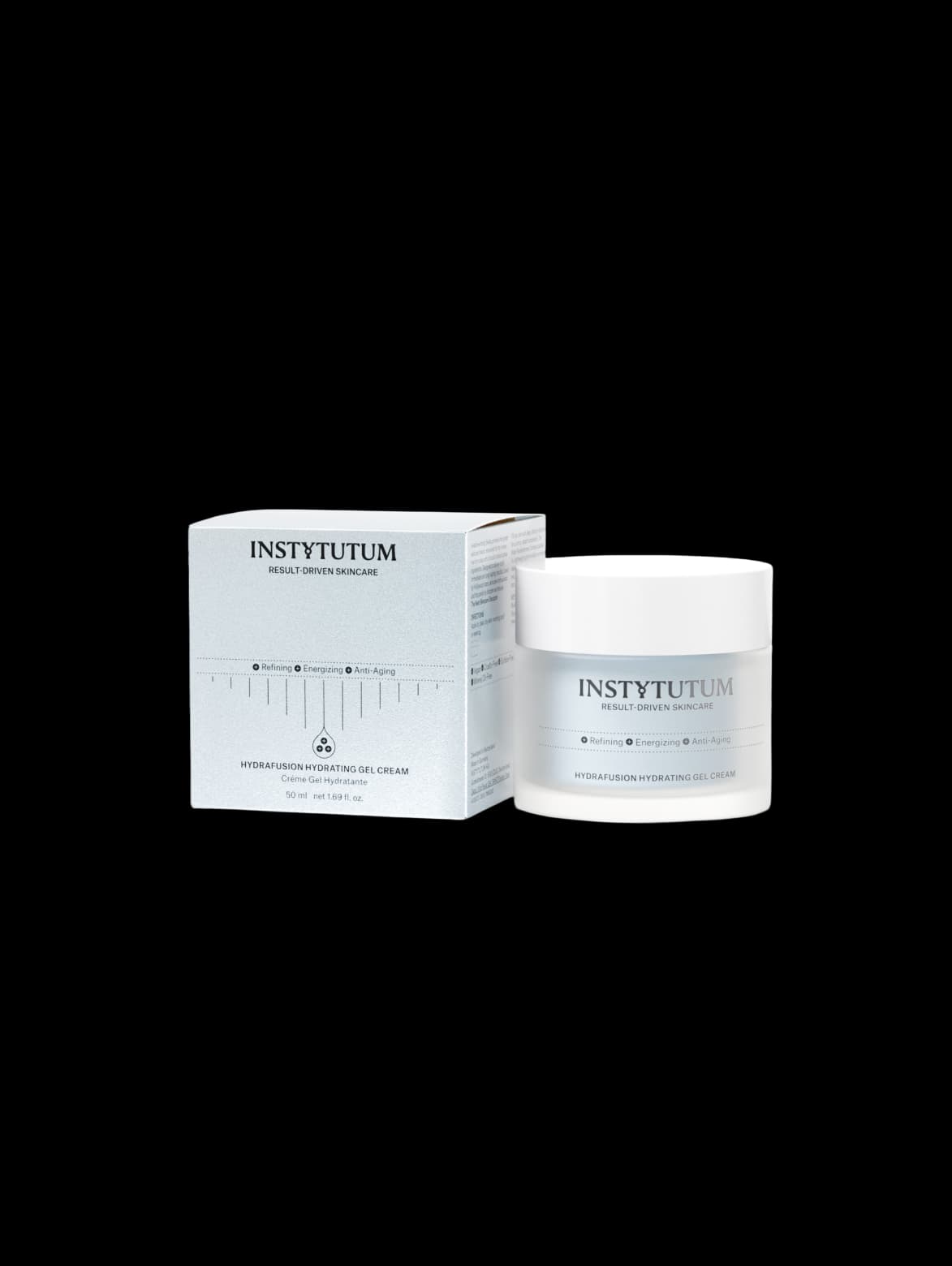
An effective strategy, therefore, is to combine different types of hyaluronic acid in the formulation of cosmetic products. For example, the hydrating gel-cream Hydrafusion Hydrating Gel Cream contains four types of hyaluronic acid with different molecular weights and makes an effective complement to retinoid use.
5. Practical care for aging skin
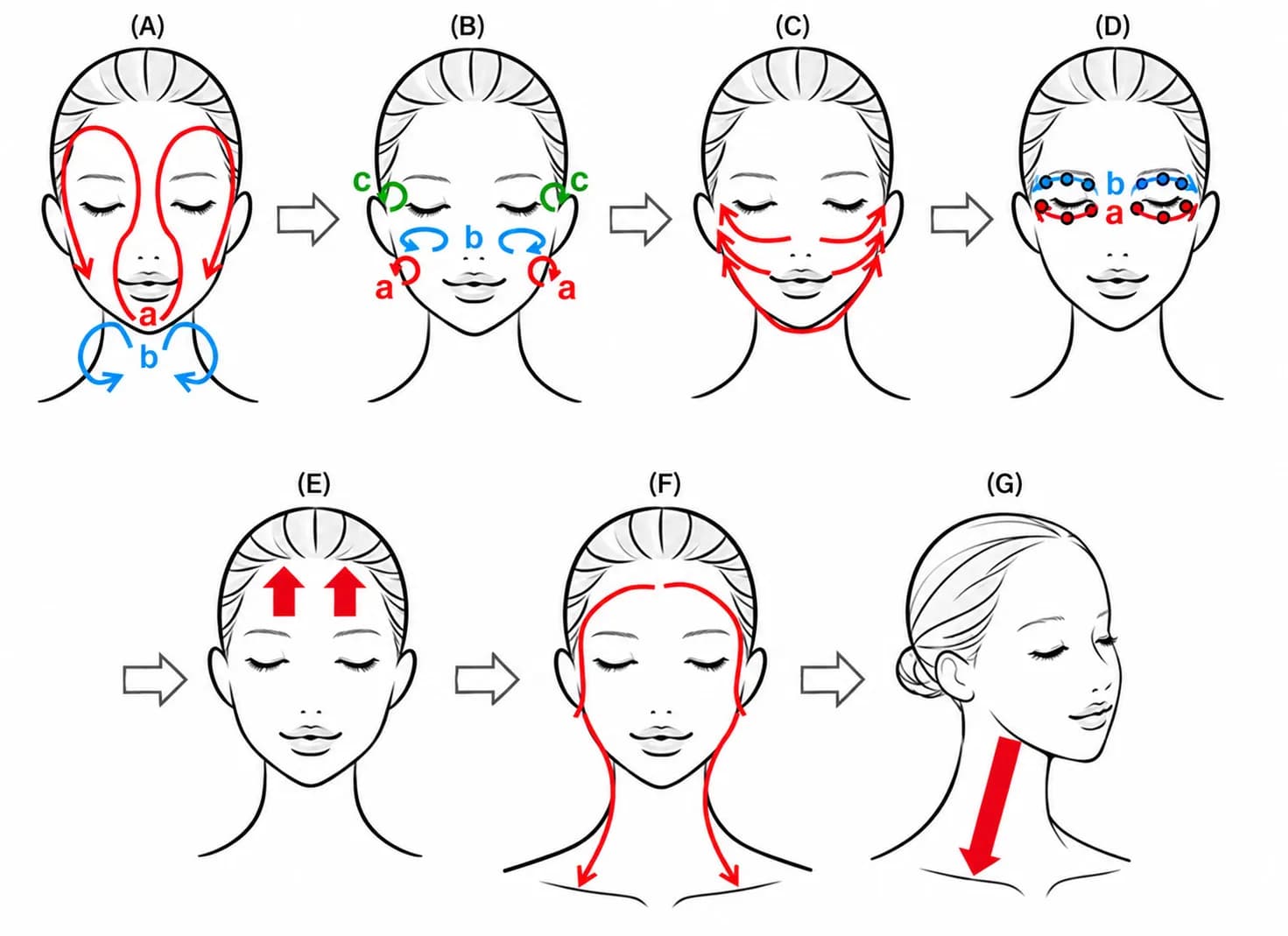
Facial massage produces morphological changes in the face, such as reduced skin sagging and lifted contours. Massage can positively affect the structure of soft tissue, including the superficial musculoaponeurotic (myofascial) system (SMAS) and subcutaneous fat. Below is a self-massage technique whose effectiveness has been confirmed in a clinical study based on the correlation of stereoscopic images with computed tomography (CT) [21].
Facial self-massage procedure
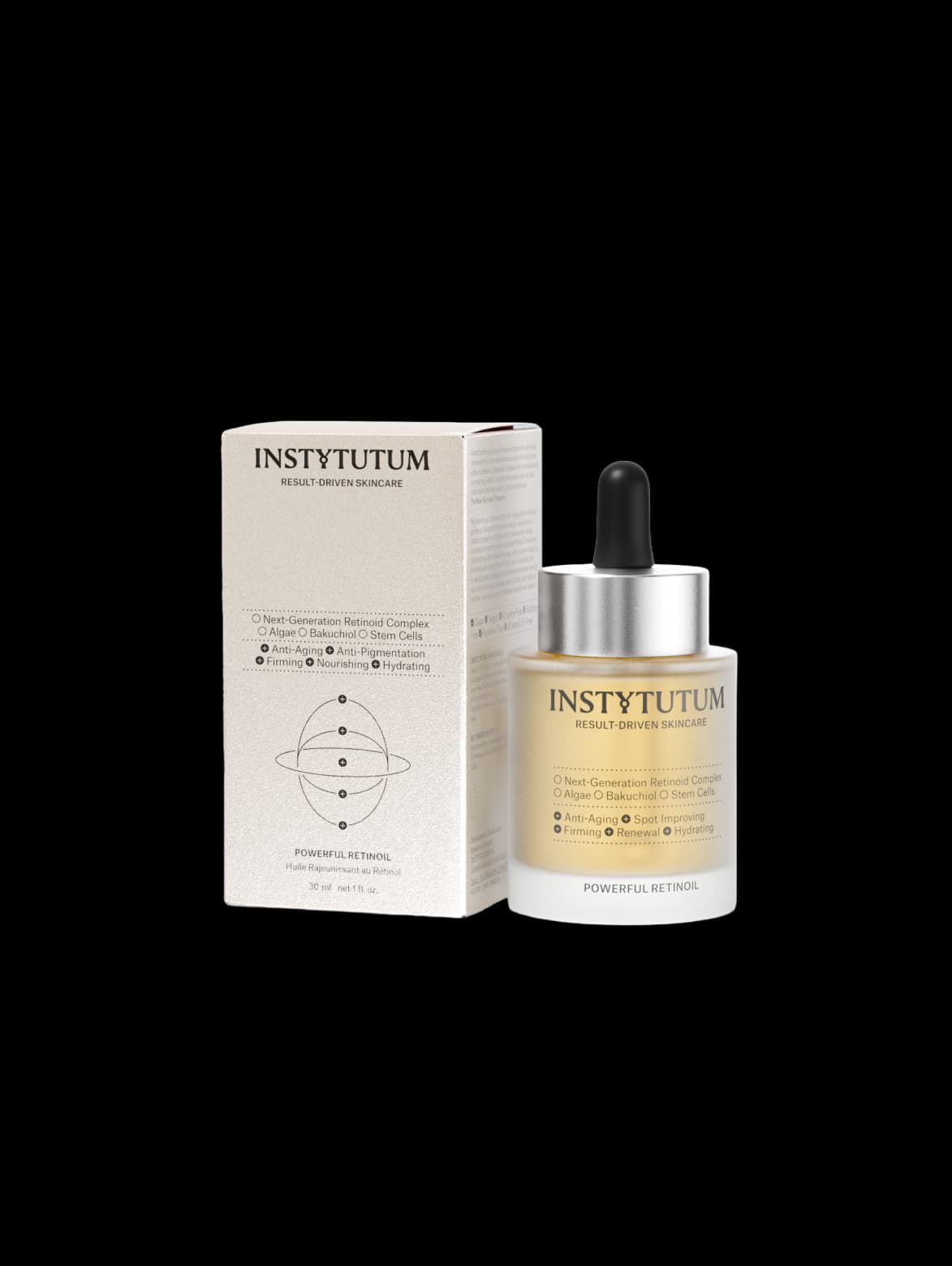
Facial self-massage is performed independently, following the steps below. For a stronger result, we recommend using Powerful RetinOil with a next-gen retinoid:
(A) Apply the oil to both hands and spread it over the face with circular movements, as shown by the red curved arrows (a). Then spread it from the facial contour down to the neck, as shown by the blue curved arrows (b).
(B) Place the backs of the middle phalanges of the four fingers (second through fifth) of both closed hands on the face and relax the skin with small circular movements, repeating three times over each of three areas: the cheek area (a), the cheekbone area (b), and the temple area (c).
(C) Place your thumbs under the chin and the inner surface of your index fingers around the nose and mouth. Then slide your fingers three times toward the temples, as shown by the red arrows.
(D) Place the fingertips of your middle and ring fingers on the lower eyelids and slide them three times along the orbital rim from the inner to the outer corner (a). Repeat the same procedure on the upper eyelids, also three times (b). Then, with the fingertips of your middle fingers, gently press three points (open black circles) on the lower and upper eyelids.
(E) Place your palm close to the forehead and pull it upward toward the hairline. Do this three times on each side of the forehead, as shown by the red arrows.
(F) Place the second through fifth fingers of both hands on the forehead and slide them from the forehead to the temples, in front of and below the ears, and behind the ears, all the way to the collarbone. Do this three times, as shown by the red curved arrows.
(G) With one hand, stroke the neck downward from the lower jaw, three times on each side of the neck.
Facial massage produces positive results both in improving the appearance of the face and in overall skin health, as shown by objective and subjective measurements. Studies show that regular self-massage improves blood circulation, reduces muscle tension, and can even help firm facial skin.
Conclusions
Aging skin is shaped by two groups of factors — internal processes and external influences. That is why it can only be cared for effectively as a whole: from within and from without. The summary below shows which approach corresponds to each aging mechanism.
Skin is not an autonomous barrier but an organ closely connected to the body's hormonal, immune, and metabolic systems. That is why caring for it is part of the concept of longevity.
Retinoids remain the “gold standard” for correcting signs of aging, but they require adequate hydration; the most effective strategy is combining different types of hyaluronic acid.
Core principle: protection and repair from the outside, stimulation and support from within.
FAQ
What happens to the skin with age?
With age, dermal fibroblasts lose functional potential, so the synthesis of collagen and elastin declines and their fibers fragment. At the same time, antioxidant defense weakens, hyaluronic acid production decreases, and glycation intensifies. The result is a loss of skin structure, firmness, and hydration.
What internal factors accelerate skin aging?
Five internal factors are identified: decreased collagen and elastin synthesis, glycation, decreased antioxidant defense combined with rising oxidative stress, psychological stress, and chronic low-grade inflammation. These can be influenced both systemically and through topical care.
Which external factor has the greatest influence on skin aging?
The key external factor is UV radiation: it damages DNA, and chronic exposure without protection leads to photoaging — loss of elasticity, wrinkles, and hyperpigmentation. Aging is further accelerated by air pollution, smoking, mechanical trauma, and dry air. Photodamage can be reduced through the use of sunscreen.
Why does skin need extra hydration when using retinoids?
Some retinoids can increase moisture loss to the outside of the skin, promoting dryness; this may also be related to intense cell renewal. Aging skin already produces less hyaluronic acid on its own, so without adequate hydration this need grows further. That is why it's worth adding sufficient hydration to a retinoid routine.
Which hyaluronic acid best hydrates aging skin?
The most effective approach is combining different types of hyaluronic acid. The high-molecular-weight form stays on the surface and forms a protective, hydrating layer that reduces transepidermal water loss, while the low-molecular-weight form penetrates deeper layers of the skin. An example of this approach is the Hydrafusion Hydrating Gel Cream, which contains four types of hyaluronic acid with different molecular weights.
Can facial self-massage firm the skin?
Facial massage produces morphological changes: it reduces skin sagging and lifts contours. According to studies, regular self-massage improves blood circulation and reduces muscle tension.
Discover the world of Longevity Skincare for comprehensive care against the first signs of aging
Sources
McDaniel, D.H. et al., 2017
Okuda I, Takeda M, Taira M, Kobayashi T, Inomata K, Yoshioka N. Objective analysis of the effectiveness of facial massage using breakthrough computed tomographic technology: Skin Res Technol. 2022 May;28(3):472-479.